This article may contain affiliate links. If you buy through them we may earn a commission at no extra cost to you.
Fast charging gets a 5,000 mAh battery to 80% in 20–40 minutes; wireless charging takes 60–180 minutes for the same result. If you charge overnight and never move the phone, wireless is fine. If you need 50% in 20 minutes before leaving the house, only wired fast charging delivers that.
How fast charging works
A standard USB charger delivers 5W—enough to top up a phone left plugged in overnight, but not much else. Fast chargers push 20W to 120W by raising voltage, amperage, or both. Your phone’s charging circuit negotiates the power level with the charger (via protocols like USB Power Delivery or Qualcomm Quick Charge) and converts that higher input into battery charge.
Real-world speeds
- 20W charger: 0–80% in roughly 40–50 minutes
- 65W charger: 0–80% in roughly 20–30 minutes
- 120W charger: 0–80% in roughly 15–20 minutes
Actual times depend on battery capacity and thermal conditions. A 6,000 mAh battery takes longer than a 5,000 mAh one at the same wattage. Charging also slows deliberately in the final 10–20%—phones throttle input power to reduce heat stress on the cells.
Cable and adapter requirements
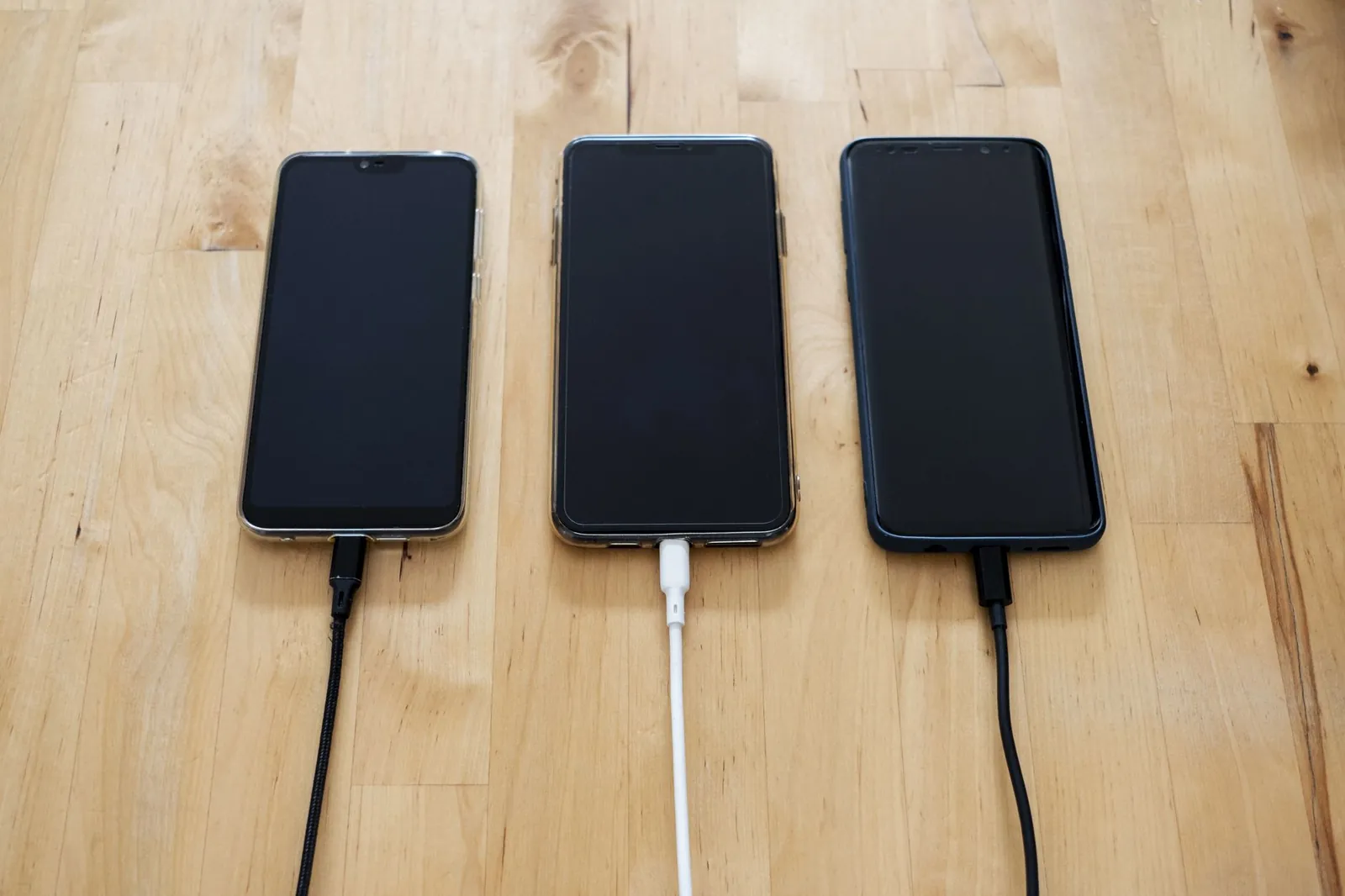
A 120W charger won’t deliver 120W through a generic USB-A to USB-C cable. You need three things to align: an adapter rated for the target wattage, a cable rated for that wattage, and a phone that supports it. A mismatched cable typically drops charging to 18W or standard 5W speeds. Check your phone’s spec sheet for supported wattage before buying a charger.
How wireless charging works
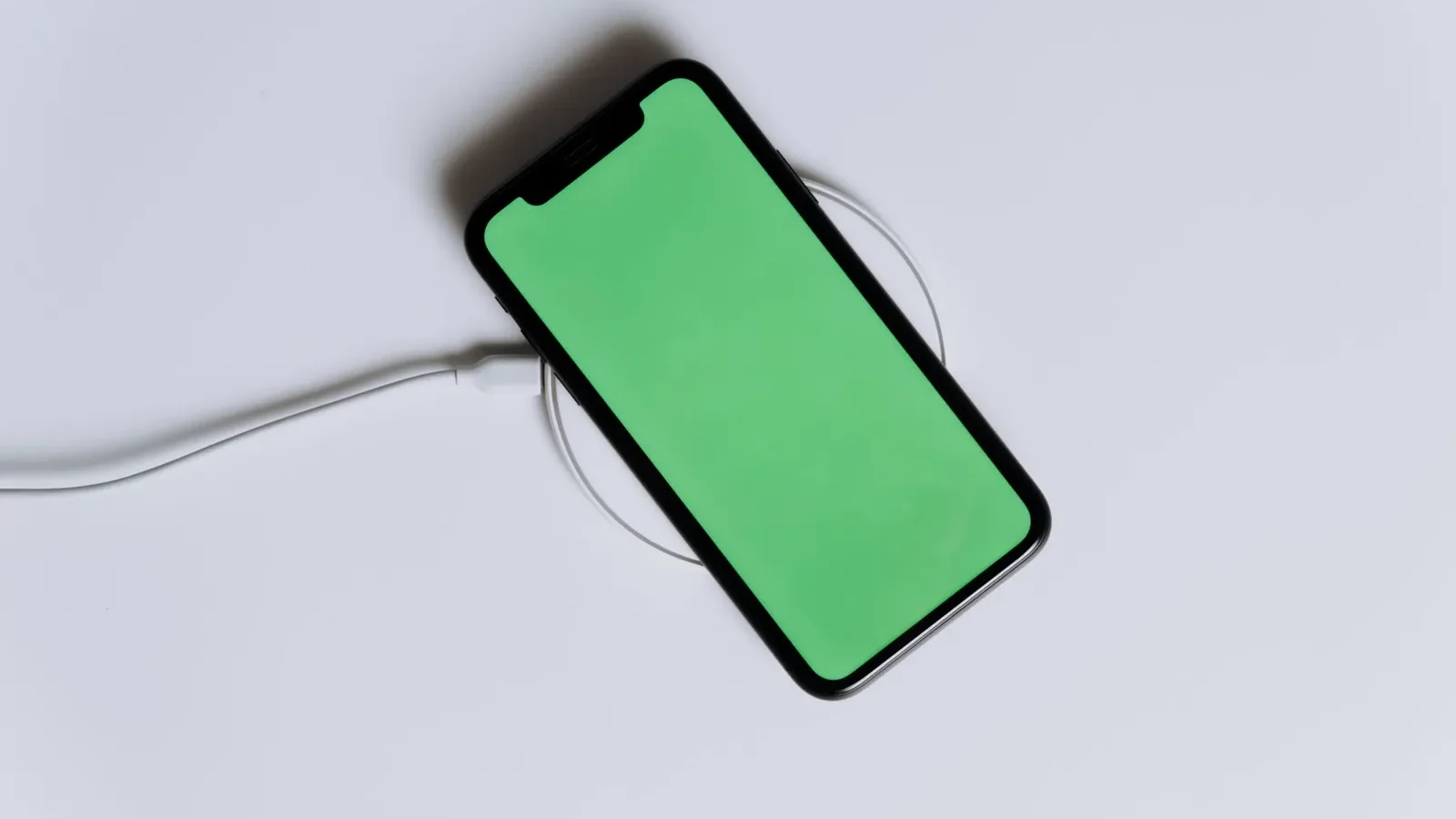
A coil in the charging pad generates an alternating magnetic field; a second coil inside your phone intercepts that field and converts it to electrical current. No physical connection is required, but the coils must overlap—misalignment by more than a few millimetres cuts power transfer sharply or stops it entirely.
Typical speeds
- Standard wireless (5–10W): full charge in 2–4 hours
- Fast wireless (15–30W): full charge in 90–150 minutes
Even 30W wireless lags behind a 30W wired charger because energy lost as heat in the air gap reduces effective power delivery. Metal cases and cases thicker than 3mm block the field entirely.
Speed comparison
| Charging method | Typical wattage | 0–80% time | Full charge time |
|---|---|---|---|
| Standard wired (5W) | 5W | 90–120 min | 2–3 hours |
| Fast wired (30–65W) | 30–65W | 20–40 min | 45–75 min |
| Ultra-fast wired (100W+) | 100–120W | 15–25 min | 30–50 min |
| Standard wireless (5–10W) | 5–10W | 120–180 min | 2–4 hours |
| Fast wireless (15–30W) | 15–30W | 60–90 min | 90–150 min |
The gap is stark: a 65W wired charger reaches 80% three to four times faster than a 10W wireless pad. If you need a usable charge in under an hour, wired fast charging is the only realistic option.
Battery health and longevity
Heat is the primary cause of lithium-ion battery degradation, and faster charging generates more of it. A battery cycled daily at 120W will lose capacity faster than one charged at 20W—though by how much depends on ambient temperature, how often you charge to 100%, and your phone’s thermal management quality.
Wireless charging transfers power less efficiently, so more energy dissipates as heat into the pad rather than the battery. That makes wireless marginally gentler on battery chemistry. In practice, modern phones throttle fast charging when internal temperatures rise, narrowing the real-world gap. Either method will produce noticeable capacity loss after 500–800 full charge cycles—roughly two to three years of daily use.
For charging habits that extend lifespan regardless of method, see our guide on how to improve smartphone battery life.
Cost and compatibility
A quality 65W USB-C fast charger runs $25–$50; a 120W charger costs $40–$80. Wireless pads start at $15 for a basic single-coil model and reach $50+ for multi-device stands that charge a phone, watch, and earbuds simultaneously. Some recent flagship phones still include a fast charger in the box; many—including current iPhones and several Samsung Galaxy models—do not.
Wireless charging requires a receiver coil inside the phone. All iPhones since the iPhone 8 support it; most Android flagships do too. Budget phones under $300 frequently omit it. If you want wireless charging across your whole device lineup, verify compatibility before buying a pad—Qi is the common standard, but maximum wattage varies by phone and pad combination.
Practical scenarios
Fast charging suits you if:
- You travel and need a reliable top-up in 20–30 minutes
- You regularly start the day with a low battery and need 50% fast
- You want one USB-C charger that works across your laptop, phone, and tablet
- Your phone doesn’t support wireless charging
Wireless charging suits you if:
- You charge overnight and time is irrelevant
- You want to reduce wear on your phone’s USB-C port
- Your phone lives on a desk or nightstand where a pad can stay permanently
- You want a single pad to charge multiple Qi-compatible devices without swapping cables
Fast charging is speed; wireless charging is convenience—they solve different problems, not the same one.
Using both is a practical default: a wireless pad at your desk or nightstand for passive charging, a 65W charger in your bag for when you actually need speed. Most phones that support wireless charging also support fast wired charging, so you’re not choosing between them—you’re choosing which to use when.
Reliability and durability
Repeated cable insertion degrades USB-C port contacts over time—typically after several thousand cycles, though daily use can surface problems in two to four years. Wireless charging eliminates that wear entirely. The trade-off: if a wireless charging coil fails inside the phone, repair costs $100–$200 at most shops, and some manufacturers won’t replace it separately from the battery assembly.
A broken fast charger costs $30–$50 to replace. USB-C ports on modern phones are more robust than older micro-USB connectors, which reduces—but doesn’t eliminate—the port-wear argument for wireless. See our roundup of best smartphones with longest battery life for models that pair strong batteries with reliable charging hardware.
Energy efficiency
Wired fast charging converts 85–95% of input power into battery charge. Wireless charging converts roughly 70–80%, with the remainder lost as heat in the pad and the air gap. Charged daily, that difference costs an extra $2–$5 per year in electricity at average U.S. rates—negligible financially, but worth knowing if efficiency matters to you.
Our verdict
Fast charging wins on speed and flexibility—a 65W wired charger is three to four times faster than a standard wireless pad and works on any phone with a USB-C port. Wireless charging wins on convenience when your phone sits in one spot for hours and you want zero cable handling. For most people, the answer is both: wireless at home, fast charging when you’re out. Neither replaces the other.
Frequently asked questions
Does wireless charging damage your battery more than fast charging?
No. Wireless charging runs cooler and is marginally gentler on battery chemistry. Fast charging generates more heat, which accelerates degradation—but modern phones throttle charging speed when the battery temperature rises, so the practical difference is small. Both methods produce noticeable capacity loss after 500–800 full cycles, or roughly two to three years of daily use.
Can you use fast charging and wireless charging on the same phone?
Yes. Most modern flagships support both. You can use a 65W fast charger when you’re in a hurry and a wireless pad at your desk. Switching between them doesn’t harm the phone or battery.
Why is wireless charging so much slower?
Power transfers through a magnetic field rather than a direct electrical connection, and energy lost as heat in the pad and air gap reduces effective delivery. Wired charging has a direct electrical path with minimal loss, which is why it can sustain much higher wattage rates reliably.
Do I need a special charger for fast charging, or will any USB-C cable work?
You need both a compatible charger and a cable rated for the target wattage. A 65W or higher charger paired with a generic USB-C cable typically drops to 18W or standard 5W speeds. Check your phone’s supported wattage in its spec sheet, then buy a charger and cable both rated to match.
Does fast charging work if my phone is in a case?
Yes—wired fast charging works regardless of case material or thickness. Wireless charging is sensitive to cases: anything thicker than 3mm, any metal content, or poor coil alignment can slow or stop charging. Use a thin, non-metal case if you charge wirelessly, or remove the case if you’re getting inconsistent results.

Lena writes about smart home, audio and the software settings nobody reads the manual for.