
This article may contain affiliate links. If you buy through them we may earn a commission at no extra cost to you.
Frequency response is a measurement of how loud a headphone plays each pitch, from the lowest bass to the highest treble. It’s expressed as a range in hertz (Hz)—typically 20 Hz to 20,000 Hz for consumer headphones—and shows whether the headphone boosts, cuts, or stays neutral at different frequencies. A flat response means balanced output across all pitches; a bumpy response means some frequencies are louder or quieter than others, and you’ll hear that difference.
What Frequency Response Actually Measures
When you see a spec like “20 Hz–20 kHz,” that’s the range the headphone can produce, not a guarantee of even volume across it. The real story is how loud each frequency is relative to the others.
Manufacturers measure this by playing test tones at specific frequencies and recording the resulting sound pressure level (SPL, in decibels) at a standardized measurement point. Those readings are plotted on a frequency response curve. A perfectly flat line means every frequency emerges at the same volume. In practice, most headphones have peaks and dips—a rise in the bass region, a cut in the midrange, a spike in the upper treble—and those deviations directly change what you hear. A peak at 100 Hz makes bass feel punchier. A dip at 2 kHz pushes vocals back in the mix. The curve is the closest thing to a reliable sonic preview before you put the headphones on.
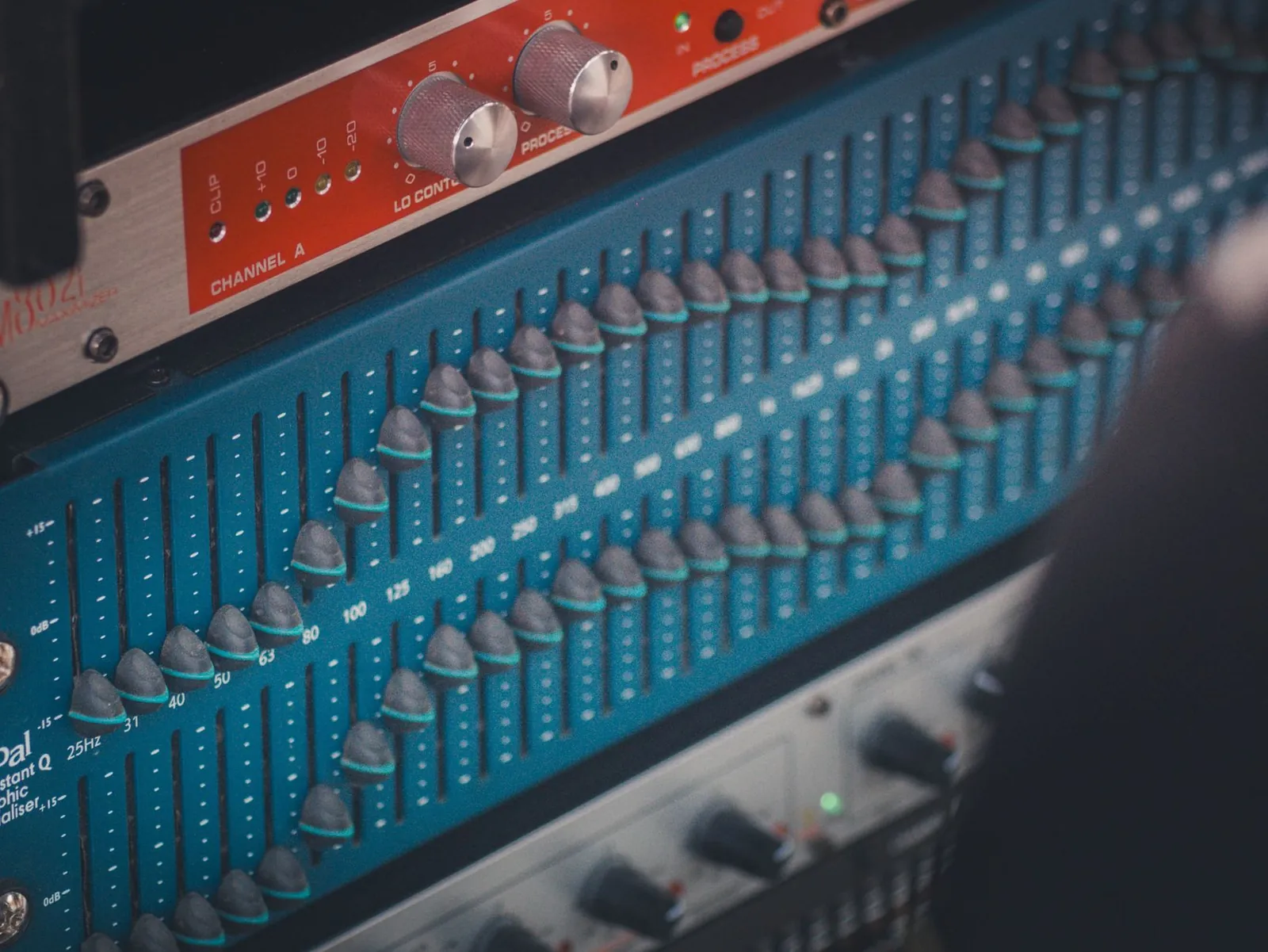
Understanding the Frequency Ranges
Sub-bass (20–60 Hz)
These are the lowest frequencies—felt in the chest as much as heard by the ear. Kick drum weight, bass guitar fundamentals, and low-frequency film effects sit here. A boost in this range adds physical impact to electronic music and hip-hop; too much boost and the sound becomes muddy rather than powerful.
Bass (60–250 Hz)
The body of bass instruments and the lower register of male vocals. A boost here adds warmth and weight to the overall sound; a cut makes music feel thin and lightweight. Consumer headphones frequently emphasize this range because most listeners find it satisfying, which is why a ±3 dB bass rise is common in mainstream models.
Midrange (250 Hz–4 kHz)
Where most instruments and all human voices live, and the most consequential range for clarity. A peak in the upper midrange—around 2–4 kHz—is a common source of listening fatigue during long sessions. A dip in the same region makes vocals and lead instruments sound distant or veiled.
Presence (4–6 kHz)
A narrow but influential zone that controls how forward or recessed music sounds. A boost here adds snap and perceived detail; a cut softens transients and reduces fatigue. Many headphones use deliberate cuts in this region for comfort during extended wear.
Treble (6 kHz–20 kHz)
Cymbals, sibilant consonants in vocals, and the sense of “air” around instruments. A rise here makes a headphone sound bright and detailed; a roll-off produces a warmer, darker character. Peaks above 8 kHz are a frequent cause of sibilance—that sharp, grating quality on “s” and “t” sounds.
How to Read a Frequency Response Spec
A spec like “20 Hz–20 kHz ±3 dB” carries two distinct pieces of information:
- Range: The headphone produces sound from 20 Hz to 20 kHz. The lower limit matters more than the upper—most music contains little above 16 kHz, but bass extension below 40 Hz is audible and felt.
- Tolerance (±3 dB): Volume doesn’t vary by more than 3 dB across that range. Each 3 dB step is roughly a doubling or halving of acoustic power, so ±3 dB is a moderate but audible swing. ±1 dB is very flat; ±5 dB or more signals significant peaks and dips.
The tolerance figure is more useful than the range. A headphone rated “20 Hz–20 kHz ±10 dB” has a dramatically more colored sound than one rated “20 Hz–20 kHz ±2 dB,” even though both claim identical coverage. Manufacturers who omit the tolerance figure are hiding the part that actually matters.
A flatter frequency response doesn’t always mean better—it means more neutral, which suits mixing and reference work but not necessarily enjoyable listening.
Flat vs. Colored Frequency Response
Flat Response
A flat curve means the headphone reproduces all frequencies at roughly the same volume, without adding its own character to the signal. This is the goal for studio monitoring and audio engineering because it surfaces flaws in a recording that a colored headphone would mask. Professional reference headphones—the Sennheiser HD 600, for example—target this profile. They often sound underwhelming to listeners accustomed to bass-boosted consumer gear, precisely because they aren’t adding anything.
Colored Response
A colored response emphasizes certain frequencies to create a specific sound signature. Bass-boosted headphones feel punchier and more physical. Bright headphones with a treble peak sound more detailed and energetic, at the cost of potential fatigue. Warm headphones with a midrange dip feel smooth and easy to listen to for hours. None of these profiles is wrong—the right choice depends on your use case and what you find comfortable over time.
Most consumer headphones are colored because listeners tend to find them more enjoyable for casual use. Check our guide to studio headphones if you need a flatter response for critical work.
Why Frequency Response Alone Isn’t Enough
A frequency response curve is a starting point, not a complete picture. Several other factors shape what you actually hear:
- Distortion: A headphone can measure flat yet distort at high volumes, producing harshness or muddiness that the frequency curve won’t predict.
- Impedance and sensitivity: These determine how loud the headphone gets from a given source. A 300-ohm headphone may measure beautifully but sound quiet and thin from a phone with a weak output stage.
- Soundstage: The sense of width and depth in a recording depends on driver design, ear cup geometry, and how the headphone manages internal reflections—none of which the frequency curve captures.
- Fit and seal: A gap between the ear cup and your ear weakens bass response by 6 dB or more at low frequencies, regardless of how the driver is tuned. On-ear headphones are especially sensitive to this.
- Ear anatomy: Measurements are taken on a standardized artificial ear. Your ear canal shape and pinna geometry differ from the test rig, so the lab curve may not match your personal experience—particularly above 4 kHz, where small anatomical differences have the largest effect.
How to Use Frequency Response When Choosing Headphones
Look at the curve shape, not just the stated range. When a manufacturer publishes a graph, compare the profiles side by side. A gentle rise toward the treble produces a brighter sound than a gentle dip. A bass peak centered at 100 Hz sounds fuller and more present than one centered at 50 Hz, which tends to add rumble without punch.
Match the curve to your use case. Mixing and mastering work calls for a flat or near-flat response. Bass-heavy genres like hip-hop and electronic music pair well with a controlled sub-bass and bass boost. Long listening sessions favor a smoother presence region—a peak between 4–6 kHz that sounds exciting in a five-minute demo can become fatiguing over two hours.
Cross-reference the curve with reviews that describe the actual sound, check impedance and sensitivity against your source device, and listen before buying if at all possible. Frequency response is a reliable predictor, but the gap between measurement and perception is real enough to matter.
Frequently asked questions
What does ±dB mean in a frequency response spec?
The ±dB figure is the tolerance—how much the volume can vary across the stated frequency range. ±1 dB is very flat and consistent. ±3 dB is moderate variation, audible but not dramatic. ±5 dB or more indicates significant peaks and dips that will color the sound noticeably.
Is a flat frequency response always better?
No. Flat is better for studio work and critical listening because it doesn’t add character to the source material. For casual listening, a colored response—bass boost, treble peak, or warm midrange—is often more enjoyable. The right choice depends on how you use the headphones and what you find comfortable over time.
Can I change a headphone’s frequency response?
Partially. EQ software can boost or cut specific frequencies, but it can’t compensate for driver distortion or a poor seal. Fit matters more than most buyers expect—even a small gap between the ear cup and your ear can cut bass response by 6 dB or more at low frequencies, which no amount of EQ fully corrects.
Why do some headphones have different frequency responses for each ear?
Manufacturing tolerances mean small driver-to-driver variations are normal. Differences under 2 dB are typical and unlikely to be audible. Differences of 3 dB or more across the midrange or treble suggest a defective unit and are worth returning.
Does higher impedance mean better frequency response?
No. Impedance (measured in ohms) and frequency response are independent specifications. Impedance affects how much power the headphone needs and how it interacts with your source’s output impedance. A high-impedance headphone can have an uneven frequency response, and a low-impedance one can be exceptionally flat.

Lena writes about smart home, audio and the software settings nobody reads the manual for.


