This article may contain affiliate links. If you buy through them we may earn a commission at no extra cost to you.
Noise-cancelling headphones work by combining two distinct mechanisms: physical sound blocking and electronic wave cancellation. Active noise cancellation (ANC) samples ambient sound through microphones, then plays a phase-inverted copy of that sound through the speaker so the two signals cancel each other out. Passive cancellation uses padding and seal materials to block sound before it reaches your ear. Most consumer headphones use both simultaneously.
The Physics Behind Active Noise Cancellation
ANC is built on destructive interference: when two sound waves of equal amplitude arrive 180 degrees out of phase, they cancel each other. A microphone samples incoming noise, a processor generates the inverse waveform, and that anti-noise plays through the driver at the same moment the original sound arrives at your eardrum. The result is near-silence for the frequencies the system can track accurately.
The processor must complete that entire loop—capture, analyze, invert, output—in under 20 milliseconds. Beyond that threshold, your auditory system perceives the anti-noise as a separate sound rather than a cancellation, and you hear a smear instead of silence. Flagship chips run this cycle at 48 kHz sampling rates or higher; entry-level chips cut corners here, which is the primary reason a $300 pair outperforms a $80 pair on complex noise, not the driver quality.
Frequency Response and Limitations
ANC is not equally effective across the frequency spectrum. Low-frequency sounds—jet engine rumble at 50–500 Hz, HVAC hum, highway traffic—have long, predictable wavelengths that are straightforward to invert. High-frequency sounds above roughly 1 kHz change too rapidly for the processor to track. In practice:
- Low-frequency reduction (below 500 Hz): 20–30 dB on current flagship headphones
- Mid-frequency reduction (500 Hz–1 kHz): 10–20 dB, depending on processor speed
- High-frequency reduction (above 1 kHz): typically 5–15 dB, handled mostly by passive isolation
This is why ANC headphones silence a plane cabin effectively but don’t make a crowded coffee shop disappear—speech sits in the 300 Hz–3 kHz range, straddling the boundary where active cancellation loses accuracy.
Passive Noise Cancellation
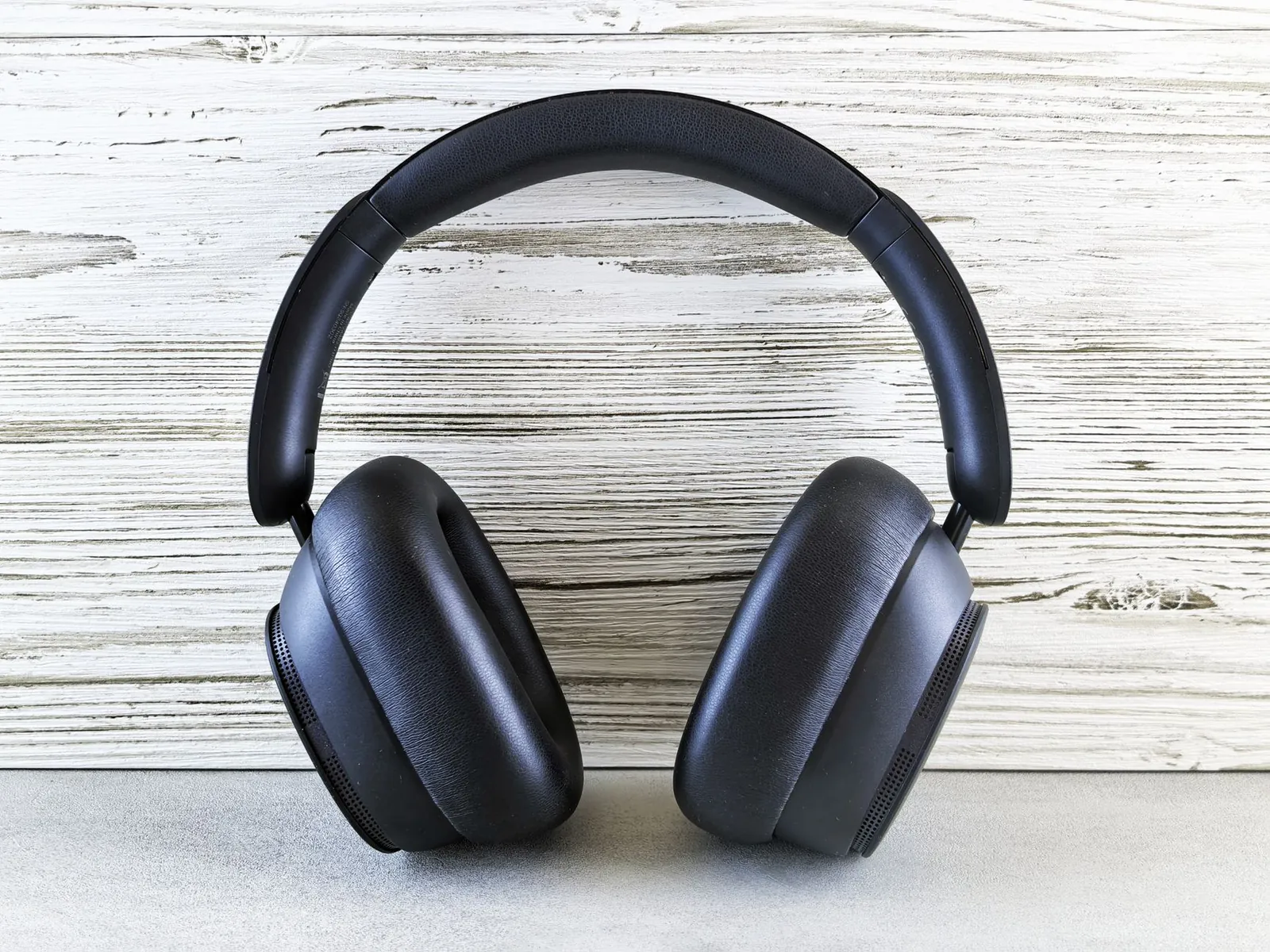
Passive isolation requires no power. It converts sound energy into heat through friction as sound waves pass through foam, silicone, or dense fabric. Over-ear headphones with thick memory-foam pads typically achieve 20–30 dB of passive isolation at mid and high frequencies. A well-fitted silicone eartip on an in-ear monitor can reach 26 dB—comparable to an industrial earplug.
Fit determines almost everything here. A single air gap around the ear cup or eartip drops isolation by 10 dB or more, because sound pressure takes the path of least resistance. This is why headphone manufacturers include multiple eartip sizes: the difference between a loose fit and a sealed fit is audible, not marginal.
How Passive and Active Systems Interact
Passive isolation directly affects active performance. A tight seal means the external microphone picks up less ambient noise to begin with, so the processor handles a smaller, more manageable signal. A poor seal forces the active system to compensate for more incoming noise, increasing processing load and battery drain. On Sony’s WH-1000XM5, for example, Sony’s published battery figures assume a proper seal—users with glasses or loose fit consistently report shorter effective battery life and weaker cancellation.
The Role of Microphones in ANC
Single-microphone ANC systems place one mic on the outer surface of the ear cup to sample ambient noise before it enters. This feedforward design works but has a timing vulnerability: the mic samples noise at the outer surface, not at the eardrum, so any variation in how sound travels through the ear cup introduces phase error.
Dual-microphone systems add a second inward-facing mic inside the ear cup. This feedback mic monitors the residual sound at the ear and allows the processor to correct errors in real time. The result is more accurate phase alignment and better cancellation of noise that leaks through the passive seal. Three- and four-microphone arrays, found in headphones above roughly $250, further improve accuracy by capturing noise from multiple angles—useful when sound arrives from the side rather than directly in front.
Microphone sensitivity cuts both ways. A more sensitive mic detects quieter ambient noise, improving cancellation of subtle background hiss. It also picks up wind turbulence more readily, which is why most ANC headphones degrade noticeably in outdoor conditions above about 15 mph wind speed. Some models include a dedicated wind-noise mode that reduces mic sensitivity and accepts weaker ANC in exchange for less wind rumble.

Battery and Processing Power
ANC draws continuous current from four components: microphones, analog-to-digital converters, the digital signal processor, and the speaker amplifier. The practical effect is a battery penalty of roughly 30–50 percent. A headphone rated at 40 hours with ANC off might deliver 25–28 hours with ANC on—a gap you’ll notice on long-haul flights.
Processor architecture also affects cancellation quality on complex noise. Multi-band processing splits the incoming signal into separate frequency ranges and applies independent inversion to each band. This handles noise that shifts frequency over time—a train accelerating, for instance—more accurately than single-band processing, which applies one inversion curve to the entire signal.
Adaptive and Transparency Modes
Adaptive ANC uses the feedback microphone loop to continuously adjust cancellation strength based on what the system detects. In a quiet office, it may apply only partial cancellation to avoid the slight pressure sensation some users notice at full ANC. On a plane, it maximizes output. Some current implementations use on-device machine learning to classify noise environments and shift between preset equalization curves for each—Bose’s QuietComfort Ultra headphones use this approach, though the audible difference from non-adaptive ANC is modest in most environments.
Transparency mode inverts the purpose entirely: the microphones amplify external sound and route it through the speaker, letting you hear conversations without removing the headphones. The quality of transparency mode depends on microphone frequency response—a flat, wide-range mic sounds natural; a narrower mic makes voices sound thin or processed.
Effective noise cancellation requires both physics (phase inversion) and engineering (microphone placement, processor speed, seal quality)—no single factor alone determines performance.
Active vs. Passive: A Direct Comparison
| Factor | Active (ANC) | Passive |
|---|---|---|
| Best frequency range | Below ~1 kHz | Above ~1 kHz |
| Typical max reduction | 20–30 dB (low frequencies) | 20–30 dB (mid/high frequencies) |
| Requires power | Yes | No |
| Affected by fit | Yes (indirectly) | Yes (directly) |
| Handles wind noise | Poorly | Moderately |
For a deeper breakdown, see our guide to active vs passive noise cancellation. If you’re shopping within a specific budget, our list of best noise-cancelling headphones under $200 covers tested options at each price tier.
Real-World Performance Factors
Laboratory ANC measurements are taken in anechoic chambers with a standardized acoustic mannequin head. Your results depend on head shape, glasses frames, hair, and how consistently you seat the ear cups. Shifting a headphone even slightly during use breaks the passive seal and can drop total isolation by 8–12 dB until you reseat it—which explains reports of “inconsistent” ANC that is actually a fit problem, not a hardware fault.
Temperature and humidity have measurable but minor effects on microphone sensitivity and foam density. Wind is the most significant real-world degrader: turbulent airflow creates unpredictable low-frequency pressure changes that the processor cannot generate a stable inverse signal for, regardless of how fast the chip runs.
Frequently Asked Questions
Does noise cancellation work on all types of sound?
No. Active noise cancellation is most effective on low-frequency, steady sounds like airplane engines, air conditioning, and traffic. High-frequency sounds like voices, sirens, and sudden noises are harder to cancel and typically see 5–15 dB reduction rather than 20+ dB. Passive cancellation handles high-frequency sounds better through physical blocking.
Why does active noise cancellation drain battery faster?
Active ANC requires continuous operation of microphones, processors, and amplifiers. The processor must sample ambient sound, compute an inverse waveform, and output it in real time. This constant processing consumes significantly more power than passive isolation, which requires no electricity. Disabling ANC typically extends battery life by 30–50 percent.
Can noise cancellation cause hearing damage?
Noise cancellation itself doesn’t damage hearing. It reduces external noise, which can actually lower the volume you need to play music at. However, if you use ANC to mask loud environments and then play music at high volumes, the combination can harm hearing over time. Keep volume moderate regardless of noise cancellation.
Why does wind ruin noise cancellation?
Wind creates turbulent, unpredictable noise patterns that don’t repeat regularly. Microphones pick up wind as low-frequency rumble, but the exact waveform changes constantly, making it impossible for the processor to generate a consistent inverse signal. Passive isolation also degrades in wind because air movement bypasses the seal. Most ANC headphones perform poorly in conditions above roughly 15 mph wind speed.
Is more expensive always better for noise cancellation?
Higher price often correlates with better ANC performance, but returns diminish quickly. A $300 headphone with a multi-microphone array and a fast processor typically outperforms a $150 model by a meaningful margin. A $500 headphone may offer only 10–15 percent better measured cancellation than a $300 model. The largest performance gap is between sub-$100 and mid-range ($150–$300) devices, where processor quality and microphone count differ substantially.

Lena writes about smart home, audio and the software settings nobody reads the manual for.