This article may contain affiliate links. If you buy through them we may earn a commission at no extra cost to you.
Active noise cancellation (ANC) uses electronics to cancel sound waves before they reach your ear; passive noise cancellation uses physical materials to block them. The critical difference is frequency: passive isolation outperforms ANC on sounds above 500 Hz, while ANC outperforms passive on the low rumbles below 500 Hz that foam simply can’t stop. Most headphones worth buying combine both.
How Passive Noise Cancellation Works
Passive isolation is physical: dense foam ear cups, sealed enclosures, and tight padding absorb and deflect sound before it reaches your ear canal. No battery, no processor, no latency—it works the moment you put the headphones on.
The physics favor high frequencies. Short sound waves lose energy quickly when they hit solid material, so voices, keyboard clicks, and ventilation hiss are easy targets. Passive isolation typically delivers 20–30 dB of attenuation above 2,000 Hz.
Passive performance limits
Low-frequency waves are long and powerful enough to bend around obstacles and pass through most materials. Even well-designed over-ear cups with memory foam padding reduce sounds below 100 Hz by only 5–10 dB—audible but not transformative. Getting more low-frequency isolation passively means heavier ear cups and higher clamping force, which causes fatigue during sessions longer than an hour or two.
How Active Noise Cancellation Works
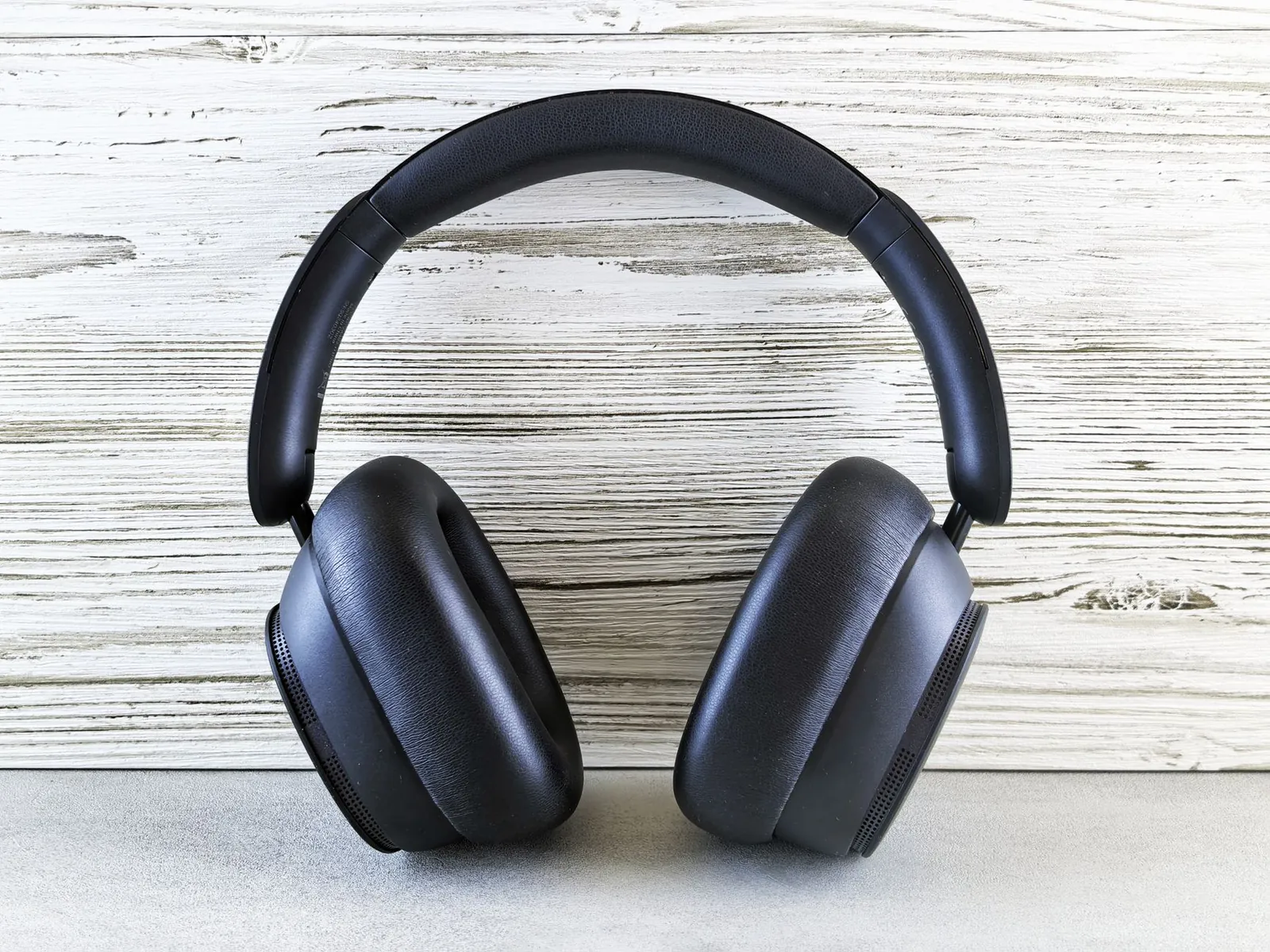
ANC places a microphone on the outside of each ear cup. A dedicated DSP chip samples the incoming sound, calculates an inverted waveform, and feeds it to the speaker driver a fraction of a second later. The inverted wave meets the original noise inside the ear cup and the two cancel through destructive interference.
The processor works best on repetitive, predictable signals—airplane engine noise (typically 60–200 Hz), train rumble, HVAC systems. These steady tones are easy to model and match. On those frequencies, ANC typically delivers 15–25 dB of additional attenuation on top of whatever passive isolation the ear cup provides.
Active cancellation tradeoffs
ANC draws power continuously. Depending on the headphones, the DSP and microphone circuit adds roughly 1–5 mAh per hour of drain, cutting total battery life by 30–50% compared to running Bluetooth alone. Processing also introduces a delay of 50–150 milliseconds, which some listeners perceive as a faint pressure sensation or a slight artificiality to the sound.
Unpredictable high-frequency noise—a colleague’s sudden laugh, a dropped mug, a passing siren—arrives faster than the processor can model it. ANC contributes almost nothing to blocking these sounds. That job still falls to the ear cup foam.
Passive blocks what it can; active cancels what it predicts. Together, they cover more of the sound spectrum than either alone.
Frequency Response: What Each Method Actually Blocks
| Frequency Range | Passive Isolation | Active Cancellation | Example Sounds |
|---|---|---|---|
| 20–100 Hz (very low) | Poor (5–10 dB) | Excellent (20–25 dB) | Airplane engines, subwoofer bass |
| 100–500 Hz (low) | Moderate (10–15 dB) | Very good (15–20 dB) | Vehicle rumble, HVAC systems |
| 500–2,000 Hz (mid) | Good (15–20 dB) | Moderate (10–15 dB) | Speech, door slams |
| 2,000+ Hz (high) | Excellent (20–30 dB) | Poor (0–5 dB) | Voices, sirens, keyboard clicks |
Office noise sits mostly in the mid-to-high range—conversations and keyboard clatter—so passive isolation alone is often sufficient. Airplane cabins and train carriages are dominated by low-frequency rumble, where ANC earns its cost.
Cost and What Drives It
Passive isolation adds roughly $2–5 to manufacturing cost per unit—foam, a sealed enclosure, and denser padding. Effective passive-only headphones are available from $30–80.
ANC requires a microphone array, a DSP chip, and firmware. That adds $15–40 to unit cost. Entry-level ANC headphones start at $100–150; premium models with multi-microphone arrays and adaptive algorithms—such as the Sony WH-1000XM5 or Bose QuietComfort 45—run $300–400.
If you’re shopping on a budget, see our guide to the best noise-cancelling headphones under $200, which covers several hybrid options that avoid the premium pricing without sacrificing meaningful ANC performance.
Adaptive and Ambient Modes
Higher-end ANC headphones now include adaptive modes that modulate cancellation strength in real time based on ambient noise level. Some detect motion—reducing ANC when you’re walking outdoors so you can hear traffic. Others ramp up cancellation automatically when engine noise increases on a flight.
Ambient or passthrough modes use the same external microphones to capture and amplify surrounding sound, letting you hold a conversation without removing the headphones. Passive isolation has no equivalent—it’s always on, and the only way to hear your environment clearly is to take the headphones off or enable a passthrough mode, which requires ANC electronics.
Battery Life and Upkeep
Passive headphones have no battery dependency for isolation. If they’re wireless, you charge the Bluetooth module, but the physical noise blocking works regardless of charge state.
ANC headphones typically deliver 20–40 hours with cancellation active. Disabling ANC extends that by 5–10 hours. At two hours of daily use, you’ll charge every four to six days. The external microphone ports can accumulate dust and skin oils that gradually degrade cancellation quality; clearing them monthly with a dry brush maintains performance. Passive foam requires nothing beyond occasional surface cleaning.
Real-World Use Cases
Air travel
Airplane cabin noise centers on engine rumble at 60–200 Hz. Passive isolation alone cuts this by roughly 10–15 dB; ANC adds another 15–20 dB on top. The combined effect is the difference between straining to hear audio at full volume and listening comfortably at 50%.
Office work
Conversations, phone alerts, and mechanical keyboards sit above 500 Hz—exactly where passive isolation is strongest. ANC contributes little in this range and can feel intrusive in a quiet room. A well-built passive headphone at $50–80 often outperforms a $120 ANC model here.
Commuting by train or bus
Low-frequency vehicle rumble and high-frequency passenger chatter arrive simultaneously. Neither technology alone handles both. A hybrid approach—solid passive isolation with ANC active—is the practical answer.
Gym or outdoor exercise
Traffic, voices, and equipment noise are sudden and unpredictable—exactly what ANC cannot model. Lightweight passive isolation that attenuates sound without sealing you off completely is preferable; full isolation outdoors creates a safety hazard.
For a deeper look at the signal processing behind these systems, see our article on how noise cancellation technology works.
Our verdict
If you fly regularly or commute by train, the $50–150 premium for ANC pays off: low-frequency rumble is the one problem passive isolation cannot solve adequately, and long journeys make the comfort difference obvious. If your noise environment is primarily an open-plan office or a gym, a well-designed passive headphone at $50–100 often delivers better high-frequency isolation than a budget ANC model and never runs out of battery. For the broadest coverage—offices, planes, and commutes—look for headphones that combine strong passive isolation with solid ANC. That combination handles the full frequency range and lets you disable ANC when you don’t need it.
Frequently asked questions
Does active noise cancellation damage hearing?
No. ANC reduces external noise rather than increasing speaker volume, so it doesn’t raise sound pressure at your eardrum. The inverted cancellation wave itself is inaudible. That said, any headphones used at high volume cause hearing fatigue over time; keeping playback at or below 60% of maximum volume during extended sessions applies regardless of whether ANC is active.
Can you use active noise cancellation with hearing aids?
Compatibility depends on the hearing aid model and the ANC implementation. Some hearing aids process external signals in ways that conflict with the electronic field ANC generates; others are unaffected. Check with your audiologist before purchasing. Passive isolation introduces no electronic signals and is generally the lower-risk option.
Why does active noise cancellation feel weird at first?
The pressure sensation comes from the ear cup creating a sealed acoustic environment while the ANC circuit simultaneously modifies the sound field inside it. The 50–150 ms processing delay can also give audio a slightly unnatural quality. Most users stop noticing both effects after a few hours of wear. If the sensation persists, try a lower ANC intensity setting—many current models offer adjustable levels—or test a different ear tip or cup size to check the seal.
Will passive noise cancellation work in silence?
Yes. Physical isolation doesn’t depend on external noise being present. In a quiet room, a well-sealed over-ear headphone still creates a closed acoustic environment, which some users find focusing and others find uncomfortable. That reaction is personal and worth testing before buying.
How much do I actually save with passive-only headphones?
Upfront, $50–100 compared to entry-level ANC models. Over five years, the gap narrows: ANC headphone batteries typically need replacement after 300–500 charge cycles (roughly two to three years of daily use), costing $30–60 per service. Passive headphones have no equivalent maintenance cost. Choose based on your noise environment first; the long-term price difference is secondary.

Dev has benchmarked laptops and phones for a decade and still reads the changelog before updating.


