This article may contain affiliate links. If you buy through them we may earn a commission at no extra cost to you.
The five models below all deliver 25–50 hours of battery life and genuine active noise cancellation for $50–$100. At this price tier, you’re not sacrificing essential sound quality—you’re trading away multi-device switching, premium microphone performance, and the last 30–40% of ANC effectiveness compared to $300 headphones.
What actually separates budget wireless headphones
Sound signature is a design choice, not a cost constraint. A $60 pair tuned toward neutral midrange can outperform a $150 bass-heavy model for podcasts and vocals. Frequency response specs (typically 20Hz–20kHz across all models here) tell you almost nothing useful—tuning within that range is what you hear.
Battery life claims require a discount. Manufacturers test at moderate volume with no ANC and at room temperature. Real-world use typically yields 70–80% of advertised hours. A model rated 40 hours delivers roughly 28–32 hours with ANC on and normal listening volume. Cold weather cuts that by another 10–15%.
Comfort compounds over time in ways a 10-minute store test won’t reveal. Key variables: ear cup depth (shallow cups press on ears after 90 minutes), headband tension (too firm causes crown pressure), and total weight. Models under 190g are noticeably lighter during 3–4 hour sessions. Use the return window—30 days at Amazon, Best Buy, and most manufacturer sites—to test during your actual routine before committing.
Best overall: JBL Tune 670NC — $80–95
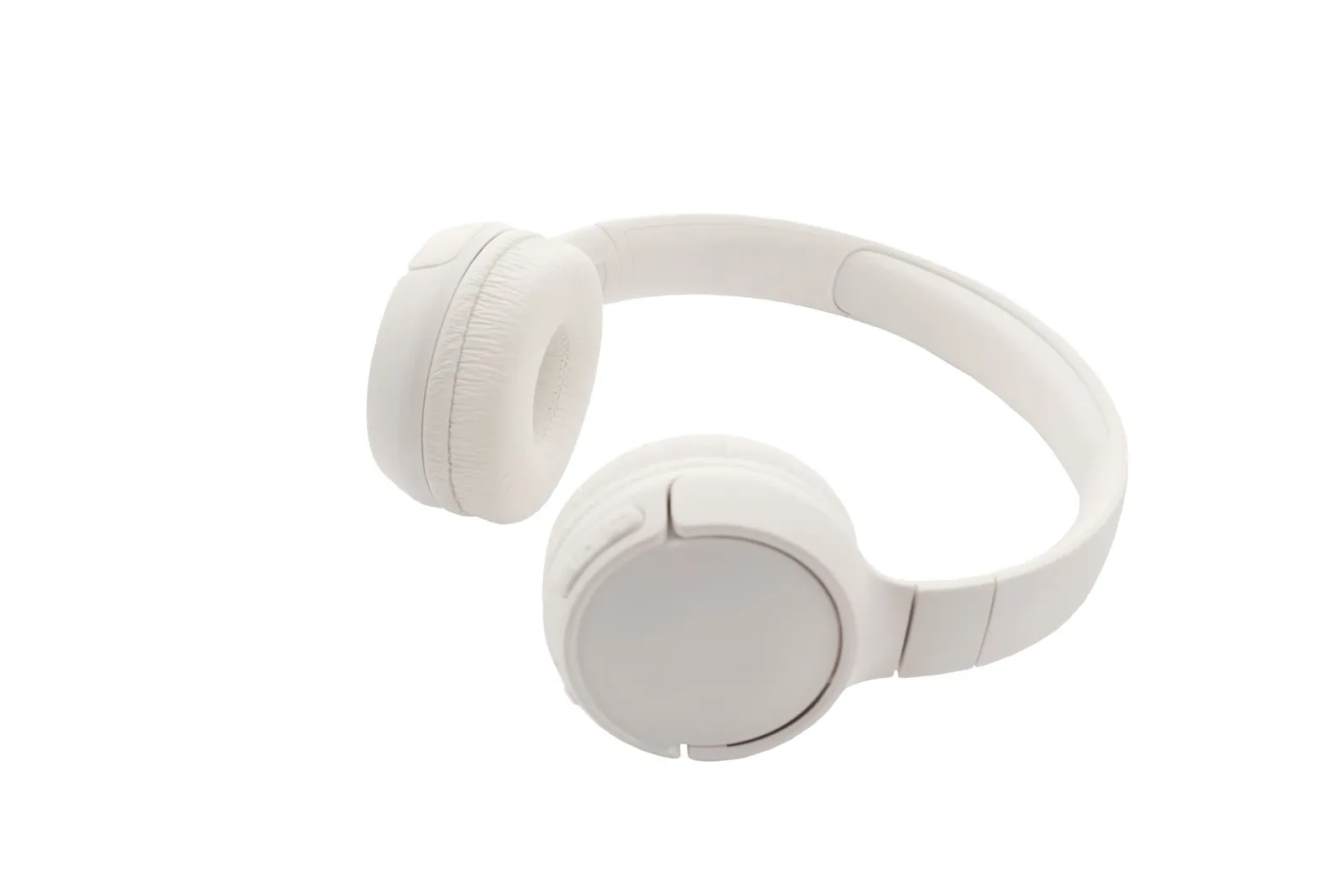
The Tune 670NC is the most balanced package in this group. Its ANC reduces low-frequency drone—airport cabin noise and traffic hum drop noticeably—though high-pitched sounds like voices still come through. That’s typical for sub-$100 ANC; expect roughly 60–70% of what a Sony WH-1000XM5 delivers.
Battery reaches 44 hours with ANC off, 35 hours with it on. The 40mm driver has a mild bass boost that adds warmth without muddying the midrange. At 190g with memory foam padding, it’s comfortable for extended sessions. Bluetooth 5.0 holds a stable connection but doesn’t support multi-device pairing—you’ll need to manually switch sources.
Two real weaknesses: the microphone is average for calls in noisy environments, and the plastic headband creaks under flex. Neither is a dealbreaker, but both are noticeable. If ANC performance is your primary criterion, compare it against slightly higher budgets in our best noise-cancelling headphones under $200 guide.
Best for sound clarity: Anker Soundcore Life Q30 — $60–75
Anker tuned the Q30 toward a flatter response curve than most competitors at this price. Vocals sit forward, instruments separate cleanly, and the low end doesn’t overwhelm the mix. For podcasts, audiobooks, and acoustic or vocal-heavy music, the difference versus a bass-heavy model is immediately audible.
ANC handles office HVAC and library background noise well but falls short of the JBL 670NC for constant low-frequency drone. Battery is 40 hours without ANC, 25 hours with it—the largest ANC penalty in this group. The stainless steel headband adds durability that plastic-only designs lack. At 185g, it’s among the lighter options here.
The microphone is the strongest in this comparison—calls are noticeably clearer than on either JBL model. Bluetooth connection handles device switching smoothly, which the JBL 670NC doesn’t. If you split time between a laptop and phone, that matters.
Best battery life: Soundcore Space Q45 — $70–85
50 hours with ANC off, 40 hours with ANC on. For week-long travel without hunting for outlets, no other model here comes close. The 50mm driver—larger than the 40mm standard—produces deeper bass extension, which works well for pop, hip-hop, and electronic music. In acoustic tracks, vocals can sound slightly recessed due to the V-shaped tuning (boosted bass and treble, modest midrange dip).
ANC is competitive with the JBL 670NC. The included carrying case adds practical value—several competitors in this range ship without one. Build uses reinforced plastic and metal hinges. At 210g, it’s heavier than the JBL and Q30, which you’ll notice on longer sessions. Bluetooth 5.3 provides stable multi-device handling.
If you need balanced tuning rather than extended battery, the Q30 above is the better choice. If you need both battery and ANC without caring much about midrange accuracy, this is the pick.

Best lightweight option: Soundcore Space A40 — $50–65
At 155g, the Space A40 is 30–55g lighter than every other model here. That gap is perceptible during gym sessions or long commutes, particularly for listeners with smaller heads. The plastic build feels solid rather than flimsy, though it won’t survive drops as well as the JBL 750BTNC.
Battery matches the larger Q45: 50 hours without ANC, 40 hours with it. Sound tuning is neutral with a slight mid-bass lift—versatile across genres without excelling at any particular one. ANC reduces steady background noise but doesn’t match the JBL 670NC or Q45 for heavy low-frequency environments like planes. The smaller ear cups may not seal completely on larger ears, which reduces both passive isolation and ANC effectiveness.
Choose this if portability and weight are the primary constraints. If ANC strength matters more than grams, step up to the Q45 or JBL 670NC.
Best for durability: JBL Tune 750BTNC — $80–100
The 750BTNC is the only model here with IPX5 water resistance, making it the practical choice for gym use or outdoor commutes in unpredictable weather. The rubberized headband resists cracking under sweat and repeated flexing—a failure point on cheaper plastic designs. Reinforced hinges add to that longevity.
Battery is 35 hours with ANC off, 30 hours with it on—solid but not exceptional. ANC is functional for offices and light commuting but less effective than the 670NC for heavy low-frequency environments; the more durable construction involves trade-offs in the ANC implementation. Memory foam ear cups are comfortable, though headband tension runs slightly firmer than the 670NC. A carrying case is included. At 210g, it’s on the heavier end.
If your headphones live in a gym bag or get rained on regularly, the water resistance justifies choosing this over the 670NC despite the ANC step-down.
Comparison
| Model | Price | Battery (ANC on) | Weight | ANC Quality | Sound Signature | Best For |
|---|---|---|---|---|---|---|
| JBL Tune 670NC | $80–95 | 35 hours | 190g | Strong | Bass-forward | Overall balance |
| Anker Soundcore Life Q30 | $60–75 | 25 hours | 185g | Moderate | Neutral | Clarity, calls, podcasts |
| Soundcore Space Q45 | $70–85 | 40 hours | 210g | Strong | Bass-heavy | Battery life, travel |
| Soundcore Space A40 | $50–65 | 40 hours | 155g | Basic | Neutral | Portability, light use |
| JBL Tune 750BTNC | $80–100 | 30 hours | 210g | Moderate | Bass-forward | Durability, gym, rain |
Our verdict
The JBL Tune 670NC is the default recommendation: strong ANC, 35 hours with ANC on, and comfortable fit at 190g. If call quality and sound accuracy matter more than ANC strength, the Anker Soundcore Life Q30 is the better choice at $15–20 less. For travel where charging is infrequent, the Soundcore Space Q45’s 40-hour ANC runtime is the deciding factor. The Space A40 suits lighter users who prioritize weight above everything else. The JBL Tune 750BTNC earns its place only if water resistance and physical durability are genuine requirements—otherwise the 670NC is the stronger headphone.
Budget headphones fail most often on comfort, not sound—a pair you stop wearing after two weeks costs more per hour than a $300 model you use for three years.
Budget wireless vs. wired at the same price
Wired headphones under $100 often deliver better measured audio performance per dollar because the budget isn’t split between drivers, Bluetooth chips, and battery cells. The trade-off is cable management during commutes and exercise. If your primary use is stationary—at a desk or on a couch—a wired model is worth comparing. See Bluetooth vs. wired headphones: pros and cons for a full breakdown.
Three specs worth checking before you buy
Codec support
Most budget models use SBC, which is universal but less efficient. Some Anker models support AAC, which can extend real-world battery life by 5–10% and reduces audio latency slightly for video. It rarely changes the listening experience meaningfully, but it’s worth confirming if you watch a lot of video content.
Warranty and battery replacement
Most manufacturers offer 12–24 months of coverage. After that, battery replacement typically costs $30–50—significant relative to a $70 headphone. Check whether the warranty explicitly covers battery degradation, and whether the manufacturer sells replacement ear pads, which wear out faster than the electronics.
Driver size
40mm is standard for budget full-size headphones. The 50mm driver in the Space Q45 produces deeper bass extension but can sound boomy with certain tuning. Larger doesn’t mean better—it means a different sound character that suits some genres and not others.
Frequently asked questions
Do budget wireless headphones have good noise cancellation?
Entry-level ANC under $100 reduces low-frequency drone—airport cabin noise and traffic hum—effectively. Voices and high-pitched sounds still come through. Expect roughly 60–70% of the ANC performance of a $300 Sony or Bose model. Passive isolation (how well the ear cups physically seal) contributes as much as the active cancellation at this price, so fit matters significantly.
How long do budget wireless headphone batteries actually last?
Manufacturers test at moderate volume, no ANC, and room temperature. Real-world use yields 70–80% of advertised hours. A 40-hour rated model delivers roughly 28–32 hours with ANC enabled at normal volume. Cold weather (below 40°F / 4°C) reduces that by another 10–15%. Every model listed here delivers 8+ hours on a single charge under normal conditions—the differences matter most for multi-day travel.
Are budget wireless headphones comfortable for all-day wear?
Comfort depends on ear shape and headband fit, not price. Test during your return window by wearing the headphones for at least 4 hours before deciding. Key things to check: whether the ear cups press on your ears (depth matters), whether the headband causes crown pressure, and whether the ear cups seal on your specific ear size. The Space A40 at 155g is the safest bet for smaller heads; larger ears may find the seal inadequate.
What’s the practical difference between Anker and JBL at this price?
JBL (owned by Harman) tunes toward bass emphasis and invests more in ANC implementation. Anker prioritizes battery life and flatter sound tuning. JBL models typically cost $10–20 more within equivalent feature tiers. Neither is objectively better—it comes down to whether you want stronger ANC (JBL) or more neutral sound with longer battery (Anker).
Should you buy last year’s model to save money?
Yes, if it’s available from an authorized seller. The models listed here have been stable for 18+ months with consistent pricing. Older inventory occasionally sells at 10–20% discounts. Buy from Amazon, Best Buy, or the manufacturer’s own site—counterfeit budget headphones are common on third-party marketplaces and won’t be covered under warranty. The performance gap between current and previous-generation budget models is minimal; Bluetooth chip upgrades from 5.0 to 5.3 rarely change real-world behavior.

Dev has benchmarked laptops and phones for a decade and still reads the changelog before updating.